


Essential Guide to Handling Horses Safely and Confidently

Handling horses safely starts with a calm approach toward the shoulder, followed by leading with a correctly fitted halter and lead rope. Hold the rope close to the halter without wrapping it around your hand, and stay clear of the horse’s path as you move. In a pasture, give the horse room, watch its behavior, and choose a safe position before removing the halter.
It’s natural to feel cautious around a large animal, especially when other horses are nearby. A steady pace and clear positioning can make each step more manageable. This guide explains how to approach and lead a horse safely, recognize signs of tension, and handle a horse in a pasture, including how to release it carefully.
Table of Contents
1. Leading horses safely
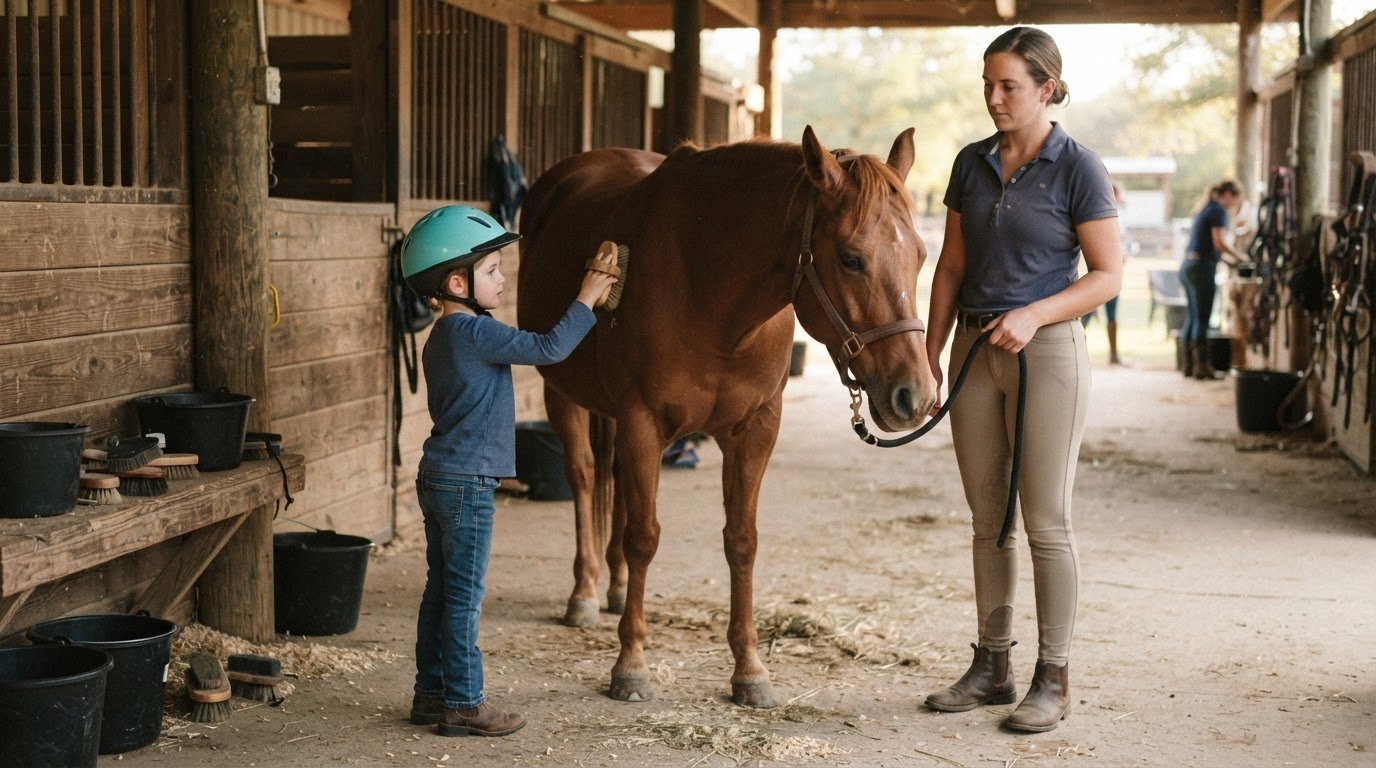
Before leading, check the halter for damage and adjust it to sit securely without pinching. The noseband should rest about two fingers’ width below the cheekbone. Attach a lead rope to the halter, and stand beside the horse’s shoulder, not directly in front of or behind it. Position yourself so you can move clear if the horse steps away.
Hold the rope about 6-12 inches below the halter clip, with a firm grip and relaxed arm. Gather the extra length in loose folds in your other hand so it doesn’t drag or tangle around either set of legs. Never coil the rope around your hand, or put fingers through halter straps, rings, or a bit. Gloves can improve your grip and help protect your hands from rope friction.
Walk beside the horse at a steady pace, leaving its shoulder room to move freely. When turning, guide the horse away from you rather than pulling it toward you. If it moves away, pause and regain a safe position. Continue only when you can lead without being pulled or crowded. Calm, consistent handling can build confidence, but each horse may respond differently.
To tie a horse, use a breakaway or quick-release knot on a secure post, leaving no more than about an arm’s length of loose rope. Stay with the horse while it is tied, including during grooming or tacking. A quick-release knot lets you free the rope promptly if the horse pulls back, reducing the risk of entanglement and injury.
2. Approaching a horse
Get the horse’s attention with a calm voice before moving closer. Walk rather than run, and approach from the front toward the shoulder, where the horse can see you. Horses have nearly 360 degrees of panoramic vision, but blind spots directly in front of the nose and behind the tail can make sudden appearances startling. If the horse moves away, stop, wait for it to settle, then try again without chasing or cornering it.
Wear closed-toe, non-slip boots, and check that the footing is firm before entering the horse’s space. Steel-toed boots are suggested when possible. Look for loose equipment, uneven ground, and nearby animals that could affect your approach. Speaking in a low, steady voice helps the horse notice you without startling it with sudden movements.
Legal responsibility for a horse-related incident depends on the state and the circumstances. Relevant considerations include the handler’s role, who controlled the horse, and what happened before the incident.
Horse-handling lesson and training costs depend on the type and scope of instruction. The price depends on the case and is given after a quote request; factors include lesson format, duration, and instruction needs.
Risks include being stepped on, kicked, bitten, or knocked off balance. Watch the horse’s movements and leave yourself room to step clear instead of standing in its path.
Beginners should develop their skills through hands-on instruction and supervision before working alone with unfamiliar horses. Practice noticing a horse’s responses, approaching without rushing, and pausing if it moves away. Familiarity with one horse doesn’t mean another will respond the same way, so build experience gradually in different situations.
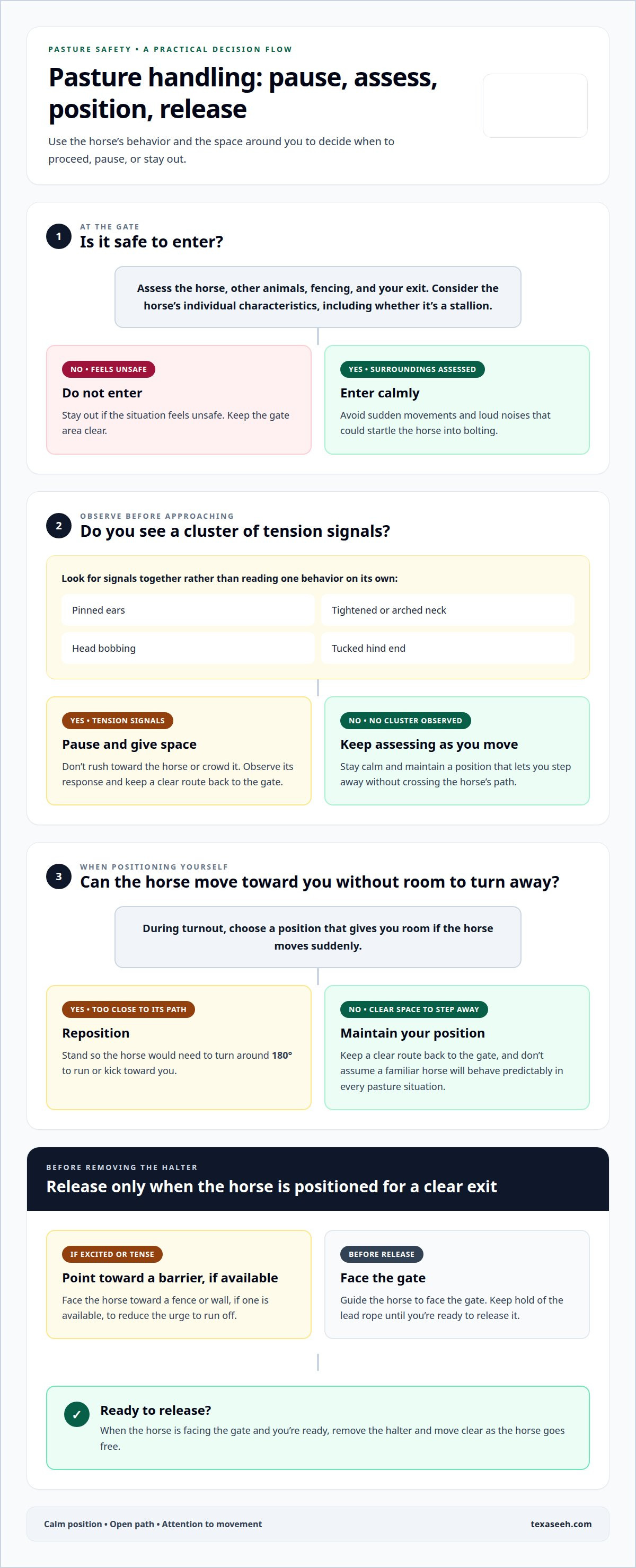
3. Handling horses in a pasture
Before entering, pause at the gate and assess the surroundings: locate the horse, other animals, fencing, and your exit. Consider the horse’s individual characteristics, including whether it’s a stallion, and don’t enter if the situation feels unsafe. Move calmly, keep the gate area clear, and avoid sudden movements or loud noises that could startle the horse into bolting.
Look for clusters of behaviors rather than interpreting one signal on its own. Pinned ears together with a tightened or arched neck, head bobbing, or a tucked hind end may indicate that the horse could act aggressively. If it seems frightened or tense, don’t rush toward it or crowd its space. Pause, observe its response, and keep a clear route back to the gate.
When approaching a horse in the field, maintain a position that lets you step away without crossing its path. During turnout, stand so the horse would need to turn around 180 degrees to run or kick toward you. This positioning gives you more room if it moves suddenly. Don’t assume a familiar horse will behave predictably in every pasture situation.
When releasing a horse, guide it to face the gate before removing its halter. If it’s excited or tense, point it toward a fence or wall, if one is available, to reduce the urge to run off. Keep hold of the lead rope until you’re ready to release it, then move clear as the horse goes free. A safe release depends on a calm position, an open path, and attention to the horse’s movement.
Texas Equine Education & Horsemanship™: Horse & Rider Showcase
Texas Equine Education & Horsemanship™ offers the Horse & Rider Showcase as a way to stay engaged with horsemanship after learning basic safety. If you’re building practical skills, an Introductory Lesson or Horsemanship Lessons may be a suitable next step. Equine Care Classes can also help you learn about horse care beyond handling.
Choose instruction that suits your experience and goals. Beginners seeking foundational guidance may start with an introductory lesson, while those developing broader skills can consider horsemanship lessons. Tiny Tot Lessons provide an age-specific option for younger learners.
Explore the Horse & Rider Showcase and related learning opportunities at texaseeh.com.
Make steady progress with your horsemanship
Build confidence by treating each interaction as a chance to learn, not a test to rush through. Notice how the horse responds to your presence and adjust your pace to the situation. When handling horses, patience and close observation can help you make thoughtful choices as circumstances change.
Continue developing your skills through supervised practice and reflection. With experience, you’ll be better prepared to recognize when to continue, pause, or give a horse more space.
Frequently Asked Questions
What does working with horses involve?
Handling horses includes everyday ground work that helps meet a horse’s needs and move safely around it. Examples include approaching, haltering, leading, grooming, picking out hooves, and releasing a horse in a pasture. It also means noticing changes in behavior and adjusting your actions to the horse and surroundings. Calm, consistent handling supports clear communication between people and horses.
What safety equipment should you wear when handling horses?
Wear closed-toe, non-slip boots and gloves that allow a secure grip. Choose durable, fitted clothing without loose hems or dangling items that could snag. Remove rings, earrings, and body studs, which may catch or be struck. A riding helmet is a sensible choice around young, nervous, or unpredictable horses. Match your protective gear to the horse’s behavior and the task.
How do you safely approach and catch a horse?
Make your presence known with a calm voice, then approach at a walk from a direction where the horse can see you. Move toward its shoulder rather than reaching suddenly for its face. If it walks away, stop and let it settle before trying again; don’t chase or corner it. In a pasture, first note nearby horses, the gate, and a clear route out.
How do you halter and lead a horse correctly?
Stand beside the horse’s shoulder and bring the halter up calmly, keeping the straps away from its eyes. For a crown-piece fastener, place the crown behind the right ear, then slide it behind the left ear before buckling. Check the fit and keep your fingers clear of straps and rings. When leading, hold the rope securely without wrapping it around your hand.
How should you handle a horse’s feet for picking and grooming?
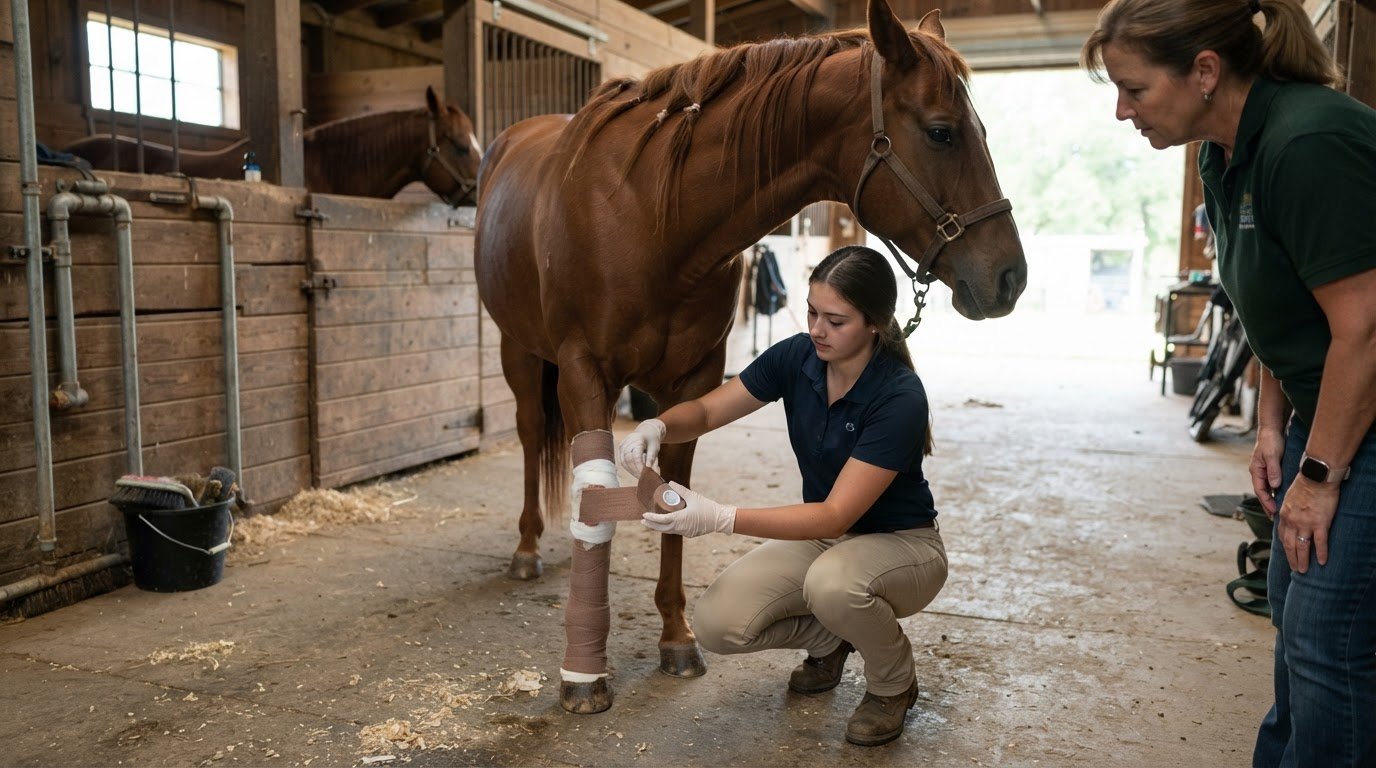
Work beside the horse, not directly behind it. Run your hand down the leg to signal what you’re doing, then lift the hoof only when the horse cooperates. To clean hooves or apply a bandage, bend forward rather than kneeling or crouching so you can move away quickly. While grooming, keep one hand on the horse and speak as you move around it.


Comments