


Equine First Aid Essentials: Keeping Your Horse Safe

A stocked kit won’t diagnose lameness, but it can help you respond calmly while arranging veterinary care. Equine first aid starts with keeping your horse safe, noting what has changed, and calling a veterinarian if you’re unsure whether care is needed.
Seeing a horse favor a leg can be unsettling, and suspected fractures, sprains, cuts, and wounds each require a thoughtful response. This guide explains what to do first, when to seek veterinary help, and which practical supplies to keep in a barn or trailer kit. You’ll also learn how to prepare for minor injuries without letting first aid delay care for a serious one.
Table of Contents
1. What should I do if my horse is lame?
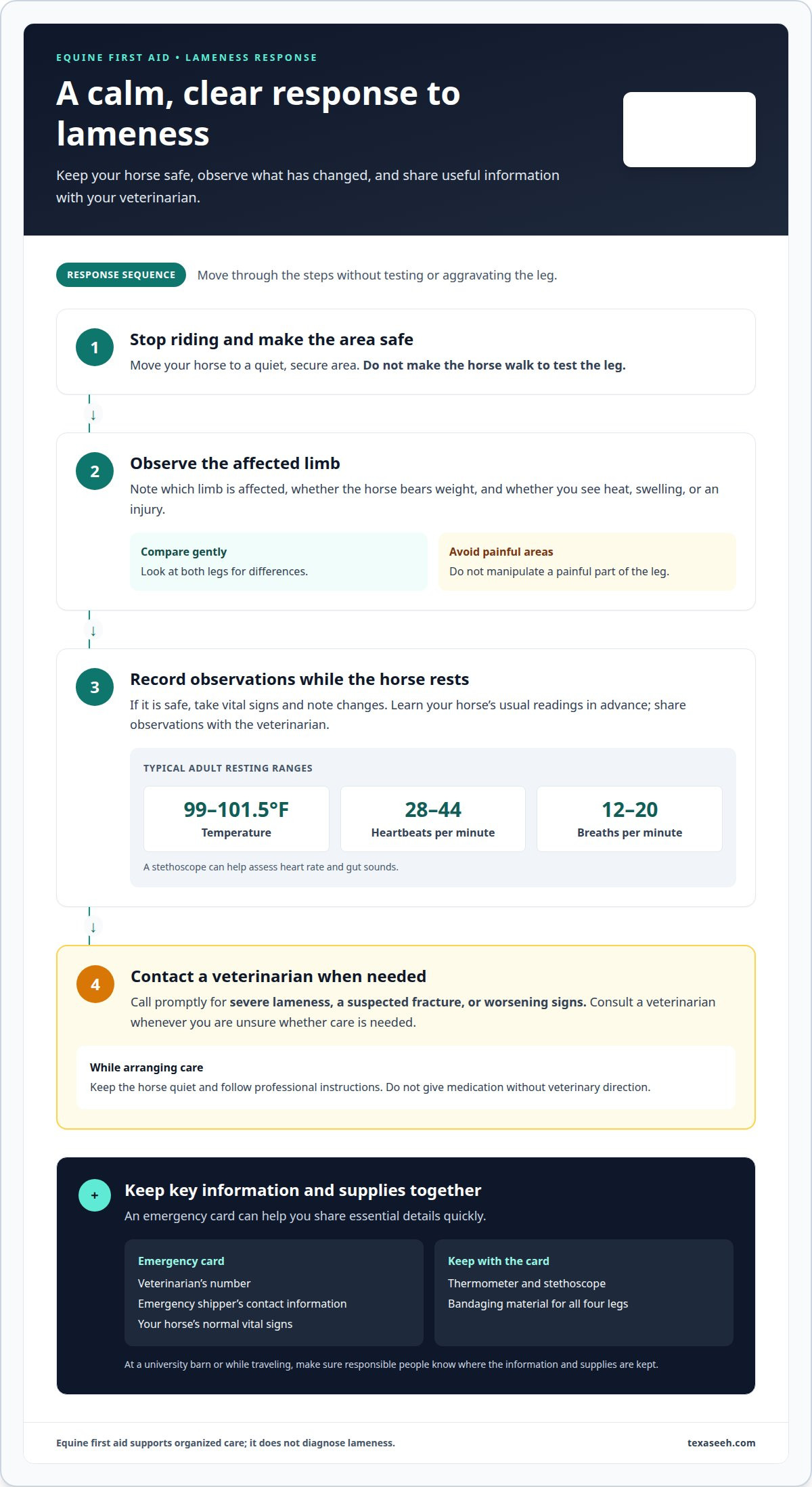
Stop riding and move your horse to a quiet, secure area. Don’t make it walk to test the leg. Note which limb is affected, whether the horse bears weight, and whether there is heat, swelling, or visible injury. Compare both legs gently, but don’t manipulate a painful area. Call a veterinarian promptly for severe lameness, a suspected fracture, or worsening signs. Consult them whenever you’re unsure whether care is needed.
If it’s safe, record temperature, heart rate, and respiratory rate while your horse rests. Typical adult resting ranges are 99-101.5 degrees Fahrenheit, 28-44 beats per minute, and 12-20 breaths per minute, respectively. Learn your horse’s usual readings in advance; a stethoscope can help assess heart rate and gut sounds. Share changes and observations with the veterinarian.
Keep an emergency card with your veterinarian’s number, an emergency shipper’s contact information, and your horse’s normal vital signs. Store it with a thermometer, stethoscope, and enough bandaging material for all four legs. At a university barn or while traveling, make sure responsible people know where to find the information and supplies.
For suspected heat stress, dehydration, or shock, contact a veterinarian promptly, keep the horse quiet, and follow professional instructions. Don’t force fluids or give medication without veterinary direction. Keep colic preparation separate from lameness care: for relatively normal colic signs and examination findings, remove feed, walk for 15 minutes, then monitor for changes over the next 30 minutes.
2. How can I treat cuts, scrapes, and wounds on my horse?
Keep your horse still and assess the wound without probing it. For a minor abrasion, gently clean the skin and surrounding area with warm water and soap or disinfectant. Sterile saline can rinse small wounds and eyes; contact-lens saline is suitable only if it contains no added chemicals. For injuries involving a joint or tendon sheath, use sterile saline, since tap water could introduce infection. If you’re unsure whether a wound needs stitches, don’t apply products; consult a veterinarian.
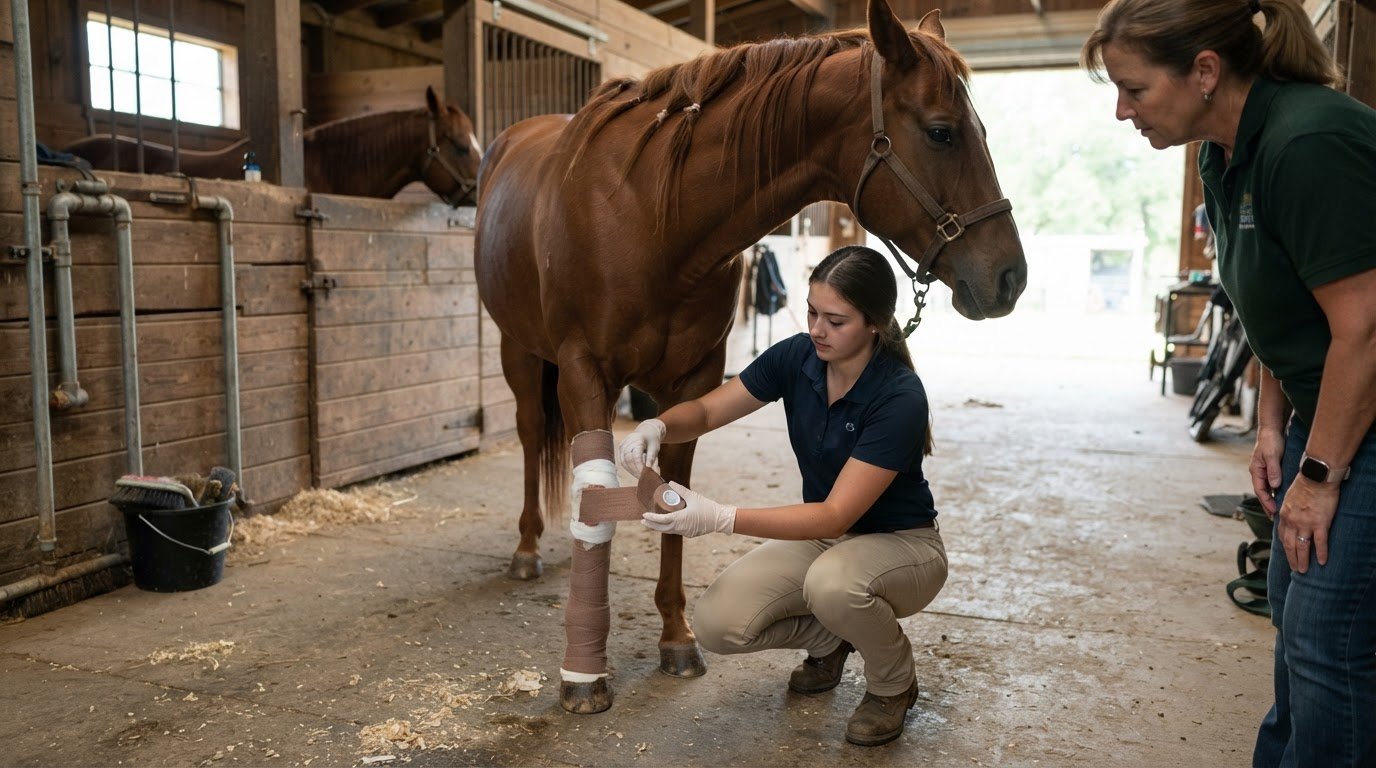
Chlorhexidine scrub needs to be rinsed thoroughly after use. Avoid repeated scrubbing after the first day, as it can remove healing tissue. A lower-leg wound may need a clean bandage for protection. Apply wraps with even pressure; an overly tight or uneven wrap can damage soft tissues. Contact a veterinarian promptly if the wound is deep, near a joint, or bleeding heavily.
A veterinarian may recommend a tetanus booster when the wound warrants it and more than 6 months have passed since the last booster. Keep sterile gauze, non-stick pads, saline, and bandage materials accessible. A thermometer can help record the horse’s temperature for the veterinarian, alongside the wound’s location and changes.
Horse owners in the United States can take equine first-aid workshops to learn how to recognize emergencies and what to do until a veterinarian arrives. Training may also cover wound care and leg wrapping. Check whether a course offers a formal credential before relying on it for certification.
3. Equine first aid kit essentials
A useful kit helps horse owners monitor basic health signs and protect common injuries while arranging care. Keep two digital thermometers reserved for horse use, along with a stethoscope for listening to heart rate, respiratory sounds, and gut sounds. Recording your horse’s normal readings makes changes easier to recognize.
Build the supply box around practical tasks:
Stock sterile gauze squares, non-stick pads, saline, and enough bandaging material for all four legs.
Add scissors, duct tape, vet wrap, and large towels for cutting, securing, padding, or applying pressure.
Include a headlamp or small flashlight for examining injuries in low light.
Pack a 60cc oral syringe for oral medication, and store ointments only with veterinary guidance.
When traveling, secure the kit in the trailer where it’s easy to access. Label the container clearly, and place emergency contacts and your horse’s vital-sign card inside. Replace any item as soon as it’s used so the kit is ready for the next need.
Review supplies twice per year, including ointments, solutions, bandages, and contact details. Check flashlight batteries twice per year, too. Ask your veterinarian which medications belong in your kit and how to use them. Don’t administer antibiotics without a specific prescription. A well-maintained kit supports prompt, organized care, but it doesn’t replace veterinary assessment for serious injuries or illness.
Equine care education at Texas Equine Education & Horsemanship™
Texas Equine Education & Horsemanship™ offers Equine Care Classes for learners building foundational horse-care knowledge. Classes cover practical topics such as feeding, stall cleaning, equipment care, nutrition, hoof care, blanketing, leg wraps, and the financial aspects of horse ownership. This learning supports thoughtful preparation, while a veterinarian remains the appropriate resource for illness or injury.
Class-based learning can turn general concern into steady care habits. Equine Care Classes build foundational knowledge of horse care, starting from the ground up. That foundation can support calm observation and clear communication when a veterinarian needs details. Education complements veterinary care; it doesn’t diagnose injuries or replace professional treatment.
Equine Care Classes can suit horse owners who want to strengthen their everyday knowledge before an unexpected concern arises. Learning to recognize changes and describe them accurately can make conversations with a veterinarian more useful. A horse’s needs can vary with age, condition, and daily routine, so careful observation matters.
These classes are educational, not emergency veterinary care. For urgent symptoms or worsening lameness, contact a veterinarian promptly. Use classes to build confidence in everyday horse-care decisions and develop questions about responsible care. To strengthen your equine-care knowledge through structured learning, explore Texas Equine Education & Horsemanship™ Equine Care Classes.
Build confidence through everyday care
Preparedness develops over time through attentive routines and continued learning. Equine first aid is one part of caring for a horse, alongside the patience to observe and respond thoughtfully. Small, consistent habits can help you feel more prepared to make careful decisions.
Keep building your understanding at a pace that suits you and your horse. Reflect on what you notice during daily care, and use those observations to guide your learning. Confidence grows through practice and a willingness to keep learning.
Every new skill can strengthen your connection with your horse. Stay curious, remain attentive, and take the next step in your horsemanship when you’re ready.
Frequently Asked Questions
How can I manage lameness in my horse?
Stop riding and don’t make your horse walk to test the affected limb. Note when the lameness began and whether it changes while the horse is standing. If a nail or other object is embedded in the hoof, leave it in place when possible for veterinary assessment and imaging. Call a veterinarian for guidance, especially if your horse won’t bear weight or the condition worsens.
How can I prevent and manage equine infections?
Keep wound-care materials clean, use fresh dressings, and don’t reuse anything that has contacted a wound. Watch for increasing heat, swelling, discharge, odor, or worsening tenderness around an injury, and report these changes to a veterinarian. Don’t give antibiotics unless they’re specifically prescribed; inappropriate use can contribute to bacterial resistance. Follow veterinary directions for any prescribed treatment.
How can I recognize signs of illness in my horse?
Look for changes from your horse’s usual behavior, such as reduced appetite, unusual dullness, restlessness, or reluctance to move. Notice changes in manure, drinking, breathing, or posture, and check for discharge or new swelling. A temperature above 102 F is a reason to call a veterinarian. Share when the change began and how it has progressed.
How can I treat cuts, scrapes, and wounds on my horse?
For a small, shallow scrape, gently remove surface dirt and protect the area from further contamination. If bleeding continues, a clean dressing can provide gentle pressure while you contact a veterinarian. Deep, gaping, puncture, or eye-area wounds need prompt veterinary advice. Avoid applying products when stitches may be needed, and describe the wound’s location, size, and cause when you call.
What are some common horse injuries that require first aid?
Common problems include cuts, scrapes, puncture wounds, leg swelling, sprains, and sudden lameness. A hoof puncture, suspected fracture, or injury near a joint needs prompt veterinary attention. Equine first aid means protecting the horse and limiting further injury while arranging appropriate care, not trying to diagnose the problem. Keep the horse quiet and give the veterinarian clear observations.


Comments