


Barn Safety for Children: Essential Tips for Parents

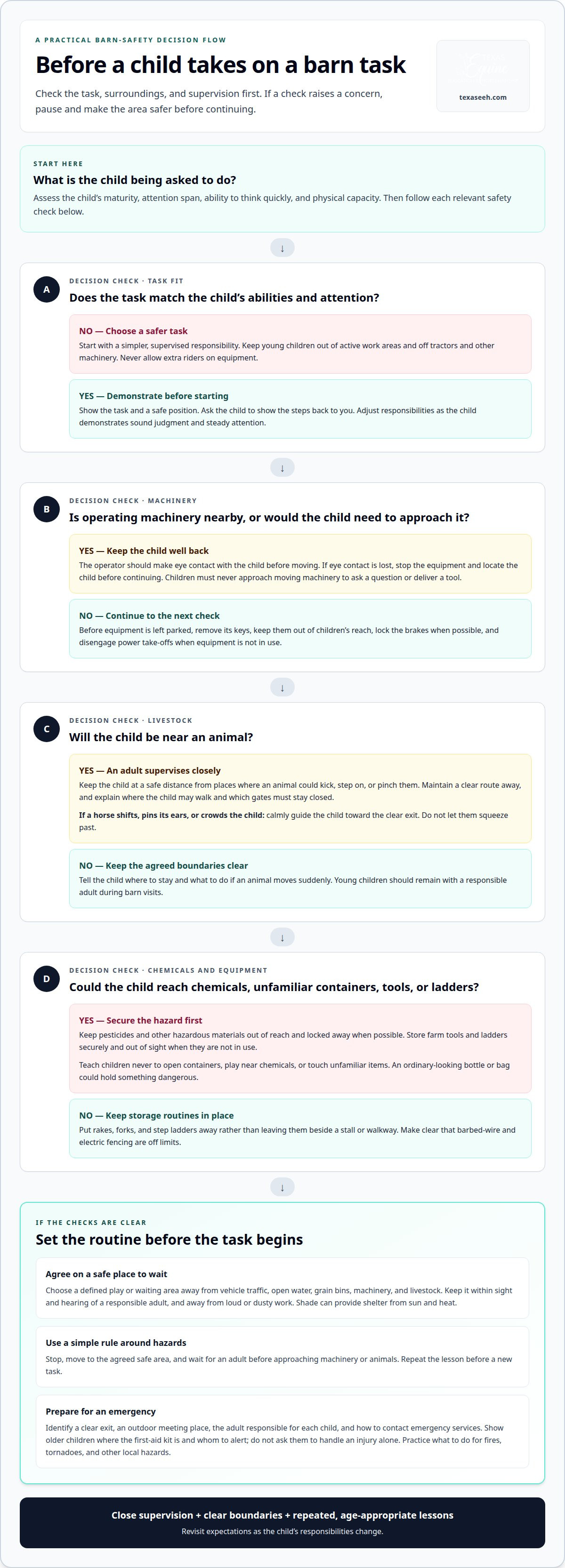
Barn safety for children starts with matching each task to a child’s age, abilities, attention span, and maturity. Keep children away from operating equipment, store chemicals and other hazards securely out of reach, and supervise them closely around livestock. Clear boundaries and age-appropriate responsibilities make the barn safer while still giving children a chance to learn.
It’s natural to want children to feel included in farm life, while recognizing that a barn holds risks they may not yet know how to judge. Build their understanding gradually and make clear which areas and items are off limits.
This guide explains how to choose suitable farm tasks, store hazardous materials securely, and reduce everyday risks around animals, tools, and machinery. You’ll find practical ways to create safer routines and help children understand what to do and where to stay.
Table of Contents
Farm tasks appropriate to youths’ ages and abilities
Match each chore to a child’s maturity, attention span, ability to think quickly, and physical capacity. A child who can safely carry a small feed scoop may not be ready to move a wheelbarrow near animals. Keep young children out of active work areas and off tractors and other machinery. Never allow extra riders on equipment. Start with simple, supervised tasks, then adjust responsibilities as the child shows sound judgment and steady attention.
In the United States, rules may differ depending on whether a child is doing family chores or employed farm work, the task, and the location. Federal agricultural child-labor requirements and state or local rules may apply, so the relevant requirements depend on the circumstances.
Set a clear boundary before starting any equipment. Children should stay well back from operating machinery, and the operator should make eye contact with them before moving. This helps confirm that the child is visible and not in a blind spot. If eye contact is lost, stop the equipment and locate the child before continuing. Explain that children must never approach moving machinery to ask a question or deliver a tool.
When machinery is parked, remove its keys and lock the brakes when possible. Keep keys out of children’s reach, and disengage power take-offs when equipment is not in use. Store farm chemicals securely away from children. These steps limit access to hazards even when adults’ attention is elsewhere.
Teach safety in short, practical lessons. Use farm safety resources to discuss tractors, animals, grain, and ATV hazards, then ask the child to identify safe places to wait. Repeat the lesson before a new task, such as carrying feed near equipment. A simple rule helps: stop, move to the agreed safe area, and wait for an adult before approaching machinery or animals.
Safe storage of chemicals and hazardous materials
Keep pesticides and other hazardous materials out of children’s reach, and lock them away when possible. Choose a storage place young children cannot enter during ordinary barn routines. Teach children never to open containers, play near chemicals, or put anything in their mouths without permission. Toddlers are especially vulnerable because they tend to explore by putting objects in their mouths. Explain that an unfamiliar bottle or bag could hold something dangerous, even if it looks ordinary.
Safe storage is only one part of reducing hazards. Young children need close adult supervision and clear boundaries around livestock. Teach them to keep a safe distance, avoid places where an animal could kick, step on, or pinch them, and maintain a clear route away. If a horse shifts, pins its ears, or crowds a child, calmly guide the child toward that clear exit instead of letting them squeeze past.
Give children a defined play area away from vehicle traffic and open water, such as ponds or rivers. A fence can help mark the boundary, but keep the area within sight and hearing of a responsible adult. Choose a spot away from grain bins, machinery, livestock, and loud work that could mask a warning or call for help. Shade offers shelter from sun and heat, while a protected location can limit exposure to wind, dust, and airborne particles.
Store farm tools and ladders securely and out of sight when they’re not in use. Put rakes, forks, and step ladders away instead of leaving them beside a stall or walkway. Point out that barbed-wire and electric fencing are off limits, and tell children not to touch unfamiliar items. Clear, specific boundaries help children recognize hazards before curiosity brings them closer.
Barn safety
Make supervision central to every barn visit. Young children should stay with a responsible adult, especially near livestock, moving equipment, or open stalls. Before entering, explain where children may walk, which gates must stay closed, and what to do if an animal moves suddenly. Teach them to keep a clear path away from livestock and never stand where an animal could kick, step on, or pinch them.
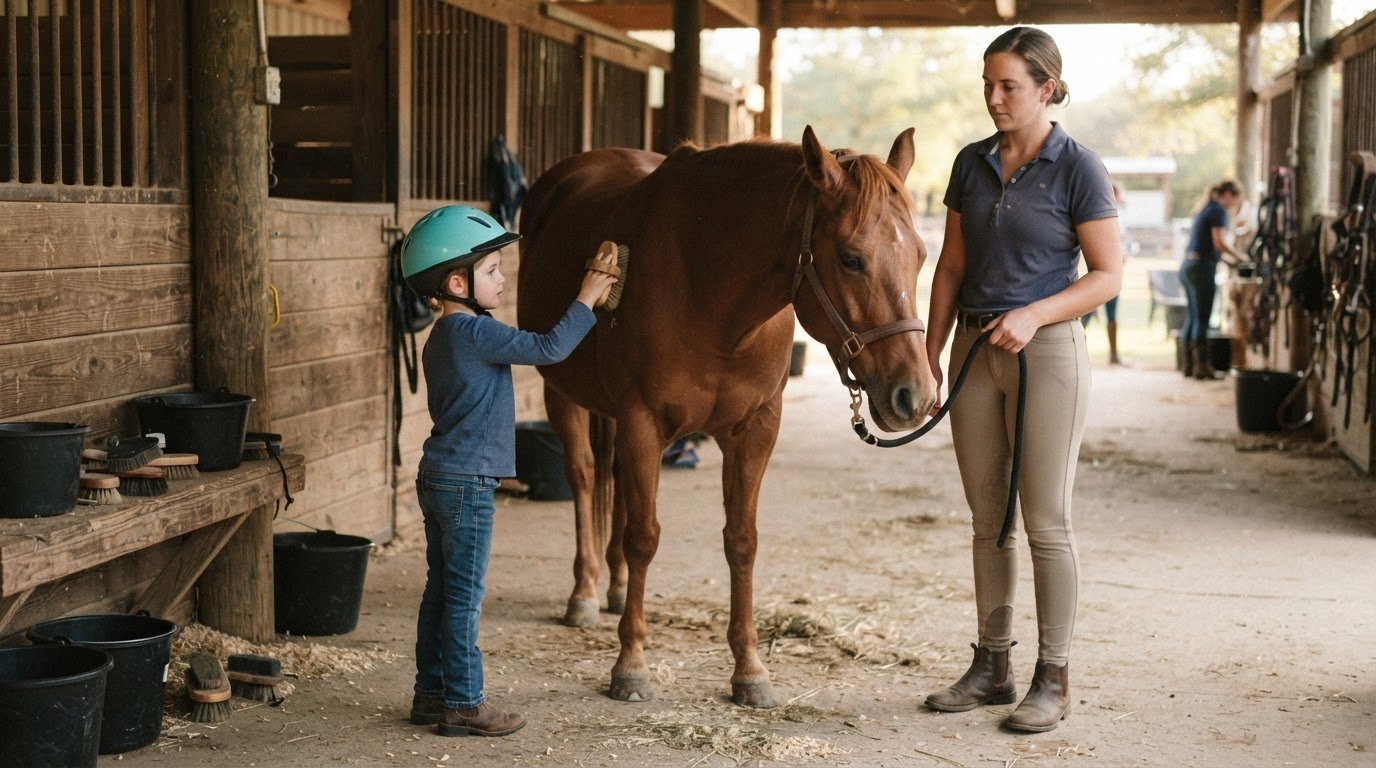
Choose clothing that helps adults spot children quickly. High-visibility clothing can make a child easier to see if they leave a designated safe area. Keep clothing practical for barn work and choose protective gear suited to the activity. Before a child helps with feeding or grooming, demonstrate the task and a safe position. Ask the child to show you the steps before working near an animal.
Dust, wind, and airborne particles can make a play or waiting area less suitable. Set up children’s safe area away from dusty work and loud activity, where they can hear an adult’s instructions. Keep flammable materials away from ignition sources, and teach children not to touch matches, heaters, or unfamiliar equipment. If smoke or fire appears, move children to the agreed outdoor meeting place and call for help.
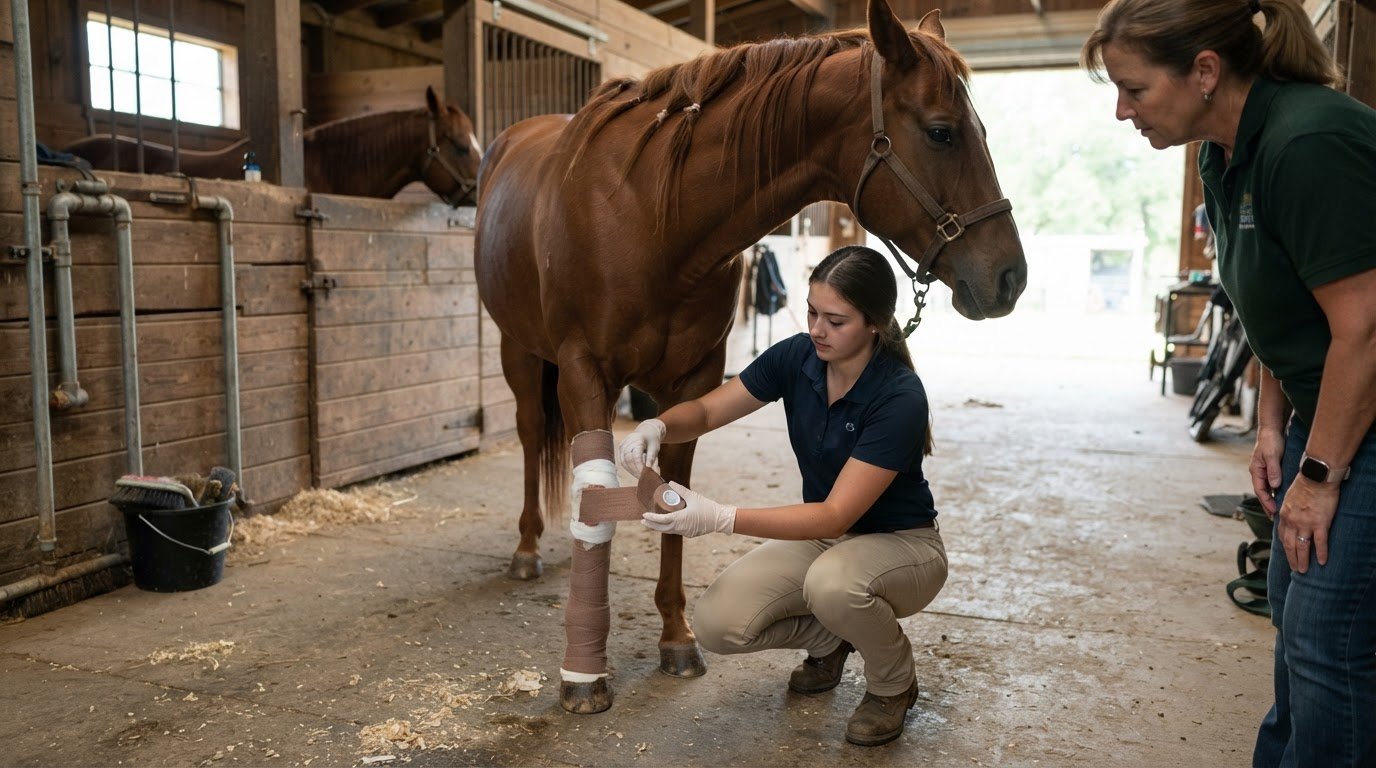
Plan for emergencies before children enter the barn. Identify a clear exit, an outdoor meeting spot, the adult responsible for each child, and how to contact emergency services. Show older children where the first-aid kit is and whom to alert, but don’t ask them to handle an injury alone. Include fires, tornadoes, and other local hazards in family practice. A calm rehearsal helps children remember where to go and which adult to find.
Consistent supervision and brief, repeated lessons help prevent avoidable injuries. Farm safety resources can support conversations about animals, machinery, and other hazards, while adults reinforce the rules during every visit.
Build Safe Barn Habits One Step at a Time
Children build confidence around horses through steady guidance and age-appropriate learning. Make barn safety for children an ongoing conversation, revisiting expectations as their responsibilities change. Ask your child to describe what they would do before entering a stall or approaching an animal. Their answers can show where another demonstration or reminder would help.
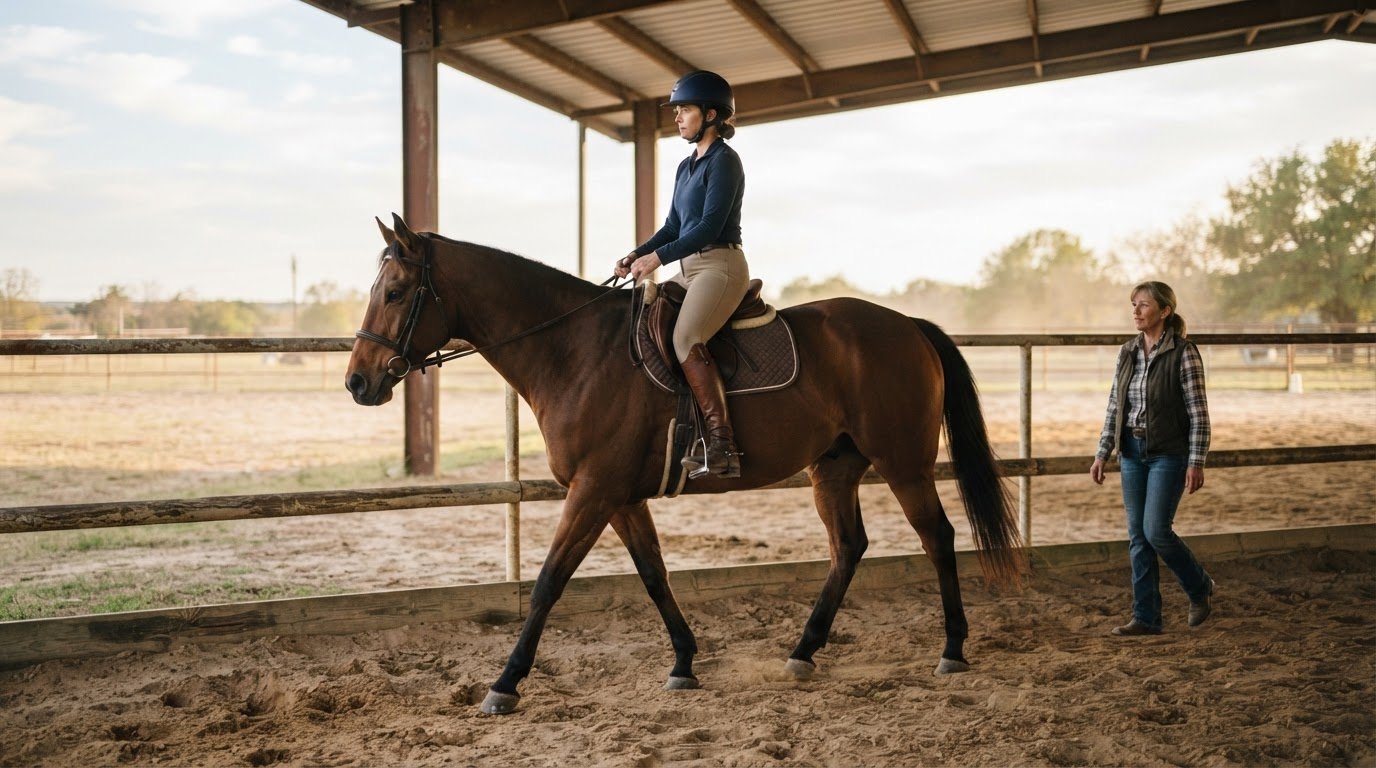
For families seeking structured, age-appropriate horsemanship learning, Texas Equine Education & Horsemanship™ offers Introductory Lessons and Tiny Tot Lessons. These provide a natural starting point for building foundational understanding alongside family safety routines. Contact Texas Equine Education & Horsemanship™ to explore a suitable next step for your young learner. With patient instruction and consistent boundaries, children can develop respect for horses and a stronger sense of readiness.
Frequently Asked Questions
What are the main barn safety hazards for children?
Beyond animal areas and stored supplies, mowing equipment creates a serious hazard. Keep children at least 60 feet from an adult using a lawnmower or weed-eater, and teach them never to approach from behind. During outdoor chores, identify where children should wait before equipment starts. This clear boundary adds a practical layer to barn safety for children.
What age-appropriate rules should children follow around barns and farm animals?
Use rules children can repeat and follow in the moment, rather than giving several directions at once. For example, agree on a simple “stop and wait” signal before entering a new work area. If a child cannot reliably follow that direction or stay with the supervising adult, keep them out of active chores and find a safer way to include them.
How can barns be childproofed to prevent falls, entrapment, and access to machinery?
Look beyond equipment access and check walking routes for trip hazards. Remove loose hoses, cords, and objects from paths children use, and watch for slick spots near wash areas. Walk the route at a child’s pace: an obstacle an adult steps over may cause a child to stumble or lose balance.
How should children safely interact with horses and other livestock?
Children should never offer feed or treats unless the supervising adult specifically allows it. An animal may reach quickly for food, startling a child or bringing its head close. Teach children to keep their hands to themselves while an adult handles feeding, and to stay calm rather than waving, shouting, or making sudden movements near livestock.
How should hay, grain, chemicals, and medicines be stored to protect children?
Keep medicines in their original, clearly labeled containers, and don’t transfer them into food or drink packaging. Close containers after use so children can’t mistake loose contents for snacks or toys. Store animal treatments separately from everyday food supplies, and make clear that only an adult handles them. These habits support consistent barn safety for children.


Comments